
Colorado medical experts
Colorado's mix of urban medical centers along the Front Range and rural critical-access hospitals creates a distinctive litigation landscape. Retaining a Colorado-licensed expert gives your case a witness who understands the standard of care as it applies within the state's geography, patient populations, and regulatory environment — details that can determine whether an opinion survives a Daubert challenge at the district court level.

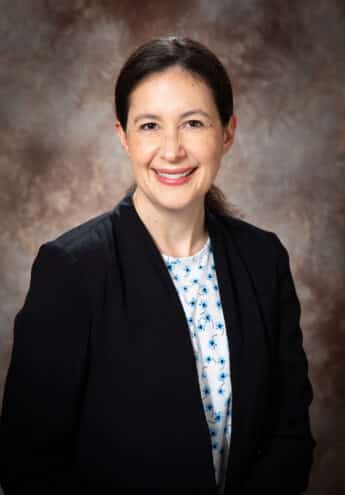

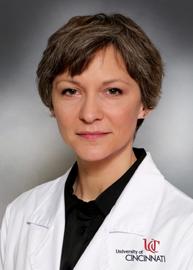
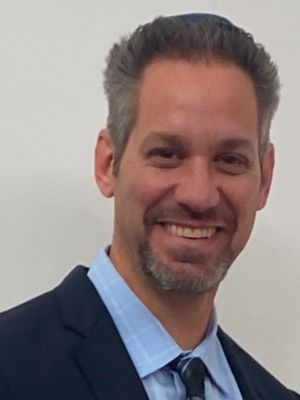
Each expert's board certification status is confirmed against the relevant specialty board's public records before the profile is activated.
Colorado medical and professional licenses are checked against the Colorado Department of Regulatory Agencies (DORA) database at the time of listing.
A current curriculum vitae is included with every expert shortlist so you can evaluate credentials before committing to a consultation.
Profiles are screened for documented disciplinary actions, license restrictions, and malpractice settlements disclosed in public records.
Common questions
What credentials should I look for in a Colorado medical expert witness?
How quickly can I get a CV and availability confirmation?
Are these experts prepared for deposition and trial testimony?
How do you verify board certification for Colorado experts?
Do you check for disciplinary actions or board sanctions against Colorado experts?
What is the typical fee structure for a Colorado medical expert witness?
Can I find experts who handle both plaintiff and defense engagements?
Does Colorado state court apply the same expert admissibility standard as federal court?
Why retain a Colorado-licensed expert
Colorado's healthcare delivery system spans Level I trauma centers in Denver and Colorado Springs, community hospitals along the I-25 corridor, and critical-access facilities serving remote mountain and agricultural communities. Standard-of-care questions that arise in a Denver academic medical center are materially different from those that arise in a rural county hospital with limited specialist availability and long transport times to higher-level care. A Colorado-licensed clinician who has practiced in conditions comparable to those at issue in your case is better equipped to explain those distinctions to a jury or to withstand cross-examination from opposing counsel who will probe exactly those points.
Beyond clinical familiarity, a Colorado-licensed expert carries direct knowledge of the state's professional and regulatory environment — continuing medical education requirements, peer review structures, and the licensing framework administered by DORA. These institutional details are relevant in cases where allegations touch on credentialing, supervision, or systemic failures within a Colorado facility. Retaining an out-of-state expert is sometimes appropriate and occasionally necessary in specialized subspecialties, but the foundational advantage of in-state licensure and practice experience is worth weighing carefully at the outset of expert selection.
Common case types in Colorado
Requests from Colorado attorneys and paralegals through this directory most frequently involve emergency medicine and trauma cases, reflecting the state's high volume of recreational and occupational injuries in outdoor and industrial settings. Orthopedic surgery, neurosurgery, and critical care medicine are among the most requested specialties, followed by obstetrics and gynecology, internal medicine, and nursing practice cases.
Ski and mountain recreation injuries generate a recurring category of negligence and product liability disputes, often involving questions about whether the standard of care for field stabilization, transport, and initial hospital management was met. Occupational health and workers' compensation cases arising from construction, agriculture, and energy sector employment are also common. Colorado's active pharmaceutical and medical device sector generates product liability and pharmaceutical expert needs as well, and the state's aging rural population produces a steady volume of nursing home neglect and long-term care cases. Misdiagnosis and delayed diagnosis matters, particularly in oncology and cardiovascular disease, are consistently represented in the request volume the directory receives.
How profiles are verified
Every expert listed in the Colorado section of this directory completes a structured intake process before the profile is published. License status is confirmed against DORA's public practitioner lookup, and board certification is cross-referenced with the issuing specialty board. The expert's current or most recent clinical affiliation is documented, and the CV is reviewed for completeness — dates of training, faculty appointments, hospital privileges, publications, and prior expert engagement history.
Disciplinary history is screened through publicly accessible state and federal records. Profiles that reflect active restrictions, surrendered licenses, or documented sanctions are either excluded or annotated clearly, depending on the nature and recency of the action. No profile is published based solely on self-reported information; each credential category requires an independent confirming source. Once published, profiles are subject to periodic re-verification, and attorneys who identify a discrepancy between a profile and verified records are encouraged to report it directly through the directory's feedback channel.
What to expect from a Colorado expert engagement
After you receive a shortlist, the standard engagement sequence begins with a conflicts check — the expert reviews the case caption and party list to confirm there is no relationship that would compromise independence. Once cleared, you provide the relevant medical records, and the expert conducts a structured review and produces a written preliminary opinion. The timeline for that review depends on record volume and the expert's current caseload, and both are addressed during the initial consultation call.
Colorado experts in this directory are available for all standard engagement formats: preliminary case screening, written reports suitable for disclosure under applicable court rules, deposition preparation, deposition testimony, and trial testimony. Some experts also provide consultation services short of formal testimony — useful for evaluating the strength of an opposing expert's opinion or identifying weaknesses in a treating physician's documented decision-making. Fee schedules, retainer requirements, and cancellation policies vary by expert and are provided in writing before engagement begins. Attorneys working on contingency cases should address fee structure early in the intake call, as not all experts accept contingency arrangements.
Daubert considerations and local procedural notes
Federal cases filed in the District of Colorado are governed by the Federal Rules of Evidence, including FRE 702 and the Daubert standard for expert admissibility. Under that framework, the district court evaluates whether an expert's opinion is based on sufficient facts or data, is the product of reliable principles and methods, and has been applied reliably to the facts of the case. Methodology documentation is accordingly critical — an expert who can clearly articulate the basis for each opinion in a written report is better positioned for a Daubert motion than one whose report relies on conclusory assertions.
Colorado state district courts apply the Colorado Rules of Evidence, which have their own expert admissibility provisions. While the underlying analytical approach shares features with the federal framework, the specific standards and the body of Colorado appellate guidance interpreting them are distinct. Attorneys litigating in state court should review current Colorado authority on expert admissibility with their own research team, as this directory does not provide legal advice and the standards evolve through ongoing court decisions. The practical implication for expert selection is the same in either venue: a well-credentialed expert with a clearly documented and methodologically defensible opinion is more durable across any admissibility challenge than one whose qualifications or reasoning leave gaps.